Pledges full support for development works, amenities at the campus
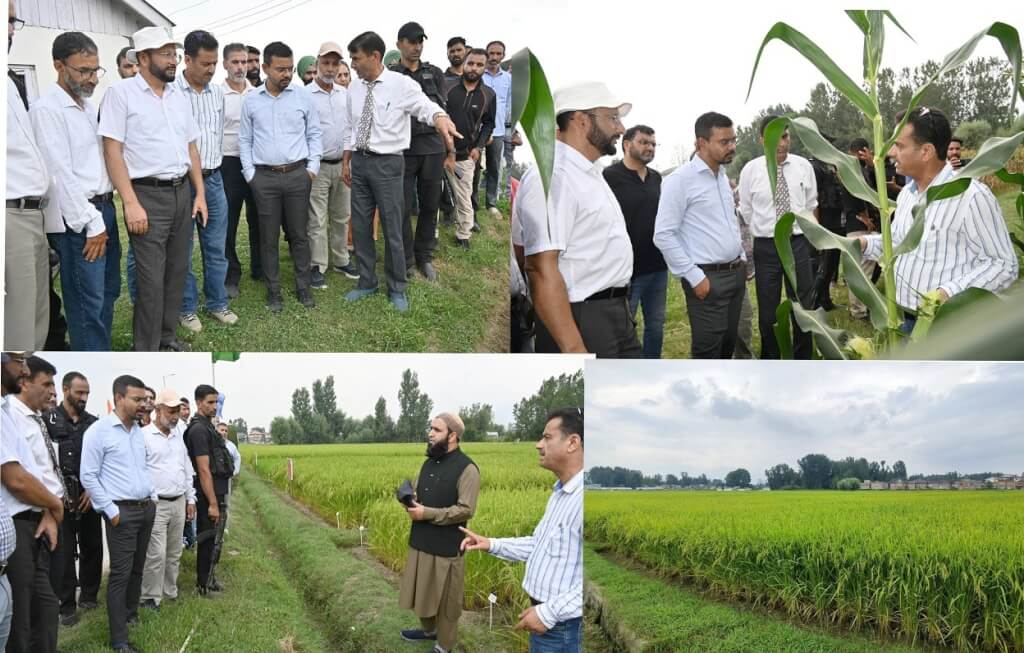
KULGAM, SEPTEMBER 01: Deputy Commissioner Kulgam, Shahzad Alam today visited Mountain Research Centre for Field Crops (MRCFC), Khudwani, Sher-e-Kashmir University of Agricultural Sciences and Technology of Kashmir (SKUAST-K).
The DC was accompanied by senior district officers and university officials and was briefed on the centre’s work across seed production, crop improvement, agronomy, plant protection, and soil health.
The DC also took note of the centre’s pivotal role in developing rice, rapeseed, and wheat varieties suited to Kashmir’s diverse agro-climatic conditions — from temperate valley plains to cold, high-altitude areas exceeding 2,000 metres — and its germplasm conservation programme, a living repository of indigenous rice landraces and exotic introductions safeguarding Kashmir’s agricultural biodiversity for future breeding and climate adaptation.
He lauded the institution’s sustained contributions and its standing as a model research facility over more than eight decades of dedicated service.
He was further apprised that MRCFC Khudwani has been upgraded to the Faculty of Agriculture, South Campus (FoASC), marking the first dedicated agricultural faculty in South Kashmir, a development long in the making. The upgraded campus will offer MSc and PhD courses in agronomy, plant breeding, plant pathology, entomology, and soil sciences.
The DC assured the university authorities of district administration’s full developmental backing, assuring that macadamisation of roads, installation of street-lighting, and all other civic amenities needed to create a conducive environment for students and faculty would be taken up on priority.
The DC also stressed that research must travel beyond experimental plots to reach all the farmers across Kashmir. He called for wider dissemination of modern technologies in field crops where improved varieties, precision input management, nano fertilisers, and resource-conservation practices, and value addition hold real potential to raise farm incomes.