SRINAGAR, OCTOBER 6: The Jammu and Kashmir Government’s commitment to notify the Model Recruitment Rules (MRRs) for the non-gazetted cadre of all Government Medical Colleges (GMCs) by September 30, 2026, remains unfulfilled, raising questions among employees over the delay and the status of the long-pending process.
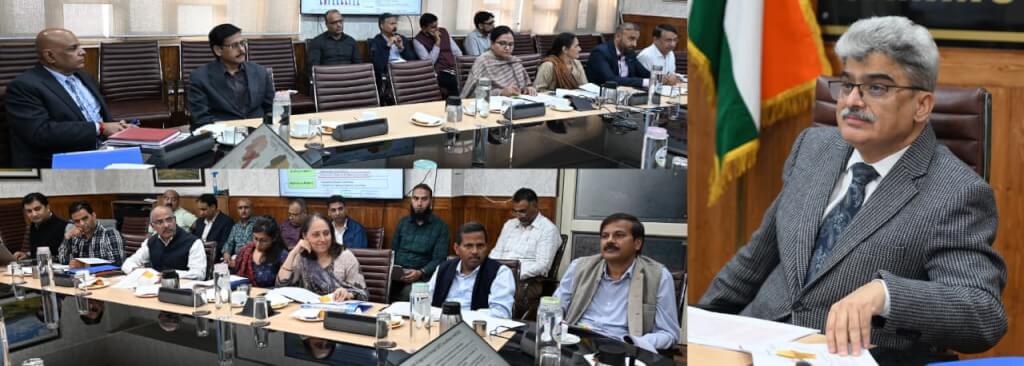
The commitment was made during a meeting chaired by Minister for Health and Medical Education, Social Welfare and Education, Sakeena Itoo, at the Civil Secretariat in August, against the backdrop of protests by non-gazetted employees of the newly established GMCs over the non-availability of recruitment rules. During the meeting, the Administrative Reforms, Inspections and Trainings (ARI&T) Department and the Health and Medical Education Department were tasked with completing the exercise and notifying the Model Recruitment Rules by September 30.
The assurance had come after employees of the newly established GMCs, including those in Anantnag, Baramulla, Doda, Kathua and Rajouri, raised concerns over the absence of a clear service framework, particularly regarding promotions, career progression and other service-related matters. The employees had suspended their agitation after receiving the government’s time-bound assurance.
However, with the September 30 deadline having passed, the rules are yet to be notified, while no detailed public explanation has so far been issued regarding the reasons for the delay. It remains unclear whether the draft rules are pending inter-departmental consultations, legal or administrative vetting, approval at a higher level, or some other procedural issue.
The delay has once again brought the focus on the prolonged uncertainty faced by the employees, who had expected the government’s assurance to result in a definite resolution within the stipulated timeframe. While procedural and legal scrutiny is an essential part of framing recruitment rules, employees and other stakeholders are seeking transparency on the present status of the file and the reasons for missing a clearly specified deadline.
The responsibility for clarifying the delay rests with the concerned departments involved in the rule-making process, particularly the Health and Medical Education and ARI&T Departments. Rather than attributing responsibility to any individual without an official explanation, the government is expected to make clear which stage the process has reached, what issues have prevented notification and when the rules are now likely to be formally notified.
For employees, the issue is not merely about another deadline but about having a defined and transparent service structure governing their careers and future prospects. With the earlier commitment now having expired, the government’s next step will be closely watched, particularly by the employees who had suspended their protest on the assurance of a time-bound resolution.