Ayaz Sofi
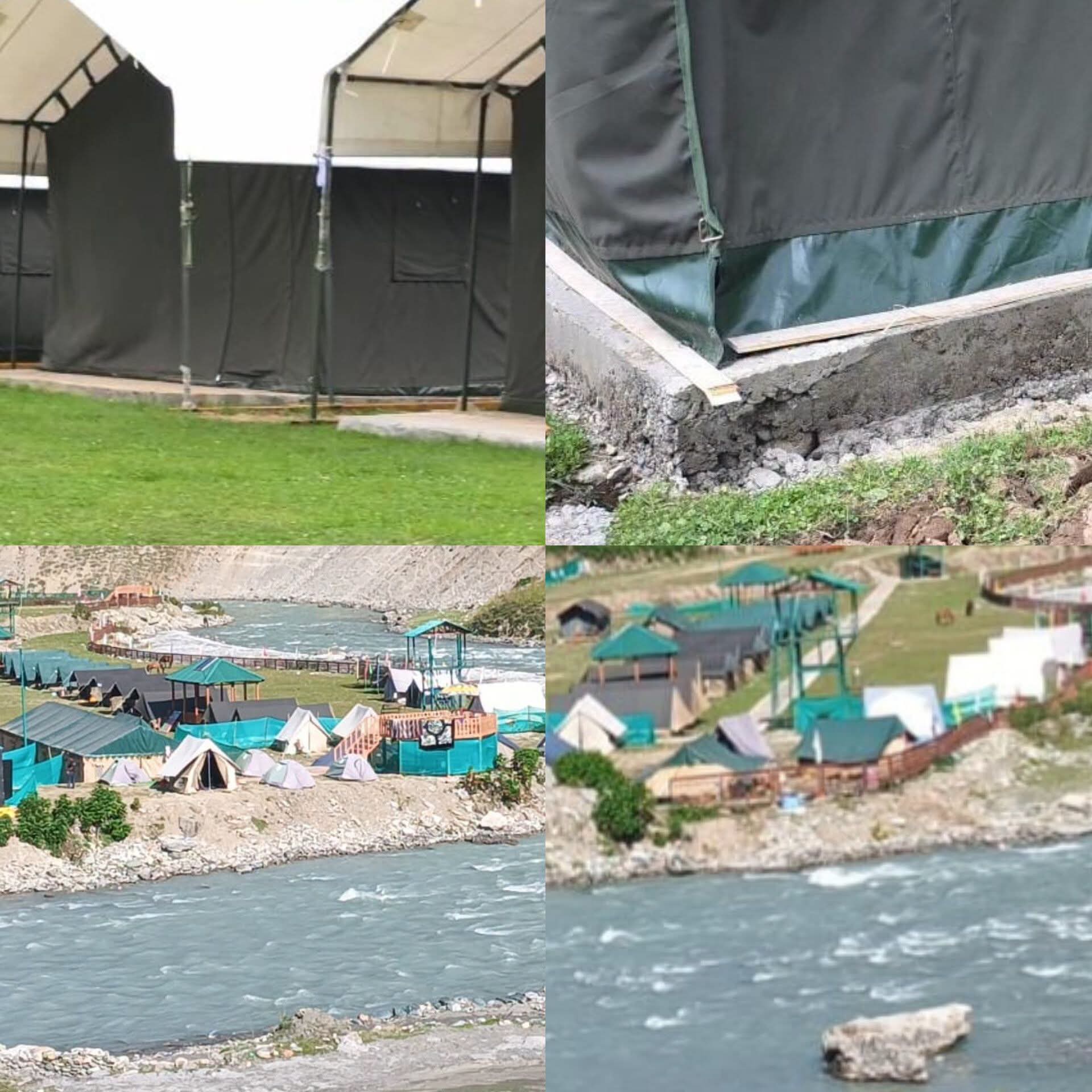
Ganderbal: Concerns have been raised over the alleged construction of permanent concrete platforms by camping agencies in Sonamarg for erecting tents, prompting questions over environmental safeguards and compliance with regulations in the ecologically fragile tourist destination.
The alleged proliferation of such structures has raised fears that unplanned development could gradually alter Sonamarg’s natural landscape and undermine the very environment that draws tourists to the region.
Of particular concern are reports that several camping sites permitted along the Sarbal–Sonamarg stretch have allegedly been established close to the banks of the Nallah Sindh. The location of such camps raises questions not only over environmental norms but also about the safety of tourists, particularly during heavy rainfall and cloudburst events, when water levels in the river can rise rapidly.
The issue has also brought the process of granting permissions to camping agencies under scrutiny. Questions are being raised over which authorities approve such sites, what conditions are attached to the permissions and whether compliance is being monitored after the camps become operational.
There are also allegations of possible involvement or connivance of certain employees of the Sonamarg Development Authority (SDA) in facilitating such activities. The allegations, however, warrant an impartial and thorough inquiry so that responsibility, if any, can be established on the basis of facts.
The administration should undertake a comprehensive inspection of camping sites across Sonamarg and verify the legality of the structures, the validity of permissions, their locations and compliance with environmental, construction and safety norms.
Any structure found to be unauthorised or in violation of prescribed regulations should be dealt with in accordance with law. Similarly, if any official is found to have facilitated violations, appropriate disciplinary and legal action should follow.
Sonamarg’s fragile ecology cannot be treated as secondary to commercial activity. Development in the area must remain within the limits of environmental sustainability and public safety, ensuring that the natural character of the destination is preserved for future generations.