I was born in Kashmir into a family that unknowingly faced one of the most misunderstood illnesses of its time.
Soon after my birth, my mother developed what we now recognize as postpartum depression. But decades ago, hardly anyone knew about it, and even fewer accepted that it was a real medical condition. Without treatment and understanding, her illness gradually progressed into severe major depression that lasted for almost ten years.
By the time I reached the third grade, my childhood had already been shaped by trauma. Growing up without an emotionally available mother leaves a void that words can barely describe. Every child deserves a mother’s embrace, but for the first ten years of my life, I experienced motherhood through the sacrifices of my father.
My father became both my mother and my father. He never let me feel abandoned despite carrying responsibilities that no single parent should have to carry alone. My elder brother stood beside us through every hardship. They became my pillars, teaching me resilience, compassion, and unconditional love.
Watching my mother’s suffering also gave me something unexpected—it gave me purpose.
I wanted to become a doctor.
Not because medicine was prestigious, but because I had witnessed what happens when illnesses are misunderstood, ignored, or dismissed.
Against all odds, I studied relentlessly and earned my MBBS degree. Later, I worked as a Medical Officer, serving patients with dedication. I then cleared NEET-PG with an 82 percentile and entered my MD training—a dream that many doctors spend years chasing.
But life had another plan.
During my postgraduate training, I saw something that deeply disturbed me. I watched colleagues undergo stress-induced miscarriages. One of my roommates suffered three pregnancy losses. A senior lost her baby too. The pressure, sleepless nights, and physical demands of residency came at an unimaginable cost.
I asked myself one question:
If I know this stress can affect pregnancy, how can I knowingly expose my own unborn child to it?
The answer changed my life.
When I got married and became pregnant, I made the most difficult decision of my career.
I left my MD.
Many people thought I had thrown away years of hard work. Some relatives even said, “You studied medicine only to stay home and raise children? A doctor like you should serve thousands of patients.”
Their words hurt.
But I had already made peace with my decision.
Because I wasn’t leaving medicine.
I was simply choosing a different way to practice it.
Doctors constantly advise mothers to exclusively breastfeed for six months instead of using formula milk. Yet many female doctors themselves are forced back to hospital duties just forty days after childbirth. Imagine knowing the benefits of breastfeeding better than anyone else, yet being unable to give it to the person you love most—your own baby.
That reality stayed with me.
I wanted my children to remember their early years with one simple memory:
“Our mother was always there.”
I wanted someone from their own bloodline to hold their hand through childhood, just as my father had held mine.
Motherhood became my greatest teacher.
Instead of preparing for examinations, I began studying for life.
I immersed myself in pregnancy nutrition, fetal programming, infant feeding, child nutrition, pediatric health, and preventive medicine.
I completed advanced courses in pregnancy nutrition, including one from LMU Germany, where I learned a concept that completely transformed my thinking:
What a mother eats during pregnancy can influence her child’s health even thirty years later.
This wasn’t simply about feeding a pregnant woman.
It was about programming the future health of an entire generation.
I also studied pediatric diabetes through courses from the Royal Liverpool University in the UK because I wanted to understand why childhood diseases are increasing.
Medical school teaches anatomy, physiology, pharmacology, and disease.
Nutrition teaches food.
I wanted to become the bridge between both worlds.
I became fascinated by questions most people never ask.
How does ultra-processed food damage metabolism?
Can pregnancy nutrition influence diabetes risk in children?
How can food prevent disease before medicines become necessary?
Those questions became my passion.
When my children were born, I applied everything I had learned.
In Kashmir, many babies traditionally grow up on tea, rice, and refined flour because that is what generations have done.
I chose a different path.
Instead of processed foods, my babies received homemade apple purée, oat porridge, carrot purée, vegetables, fruits, and freshly prepared meals.
Many relatives laughed.
They joked that I had returned from America because I wasn’t feeding babies the way everyone else did.
But one person always stood firmly beside me—my mother-in-law.
She never interfered with my parenting. Instead, she proudly told relatives,
“My daughter-in-law makes everything fresh at home. She doesn’t feed junk food.”
Her support gave me confidence during moments when I doubted myself.
Slowly, something remarkable happened.
Young mothers began calling me.
Then more mothers called.
The questions multiplied every single day.
“What should I feed my baby?”
“How much should I give?”
“When should I start?”
“Is this food safe?”
Although we live in Bengaluru, in a community of nearly 10,000 families with excellent medical facilities, many parents still chose to ask me because they wanted guidance that combined science with practical parenting.
That inspired me to begin writing my first book—a complete guide to weaning, infant nutrition, recipes, feeding schedules, and one-year diet charts that remove the daily stress of deciding what to cook for a baby.
I am also writing a comprehensive pregnancy guide that brings together everything I wish every expectant mother knew—from trimester-wise nutrition and gestational diabetes management through diet, to anemia, constipation, labor signs, danger signs, and evidence-based lifestyle guidance.
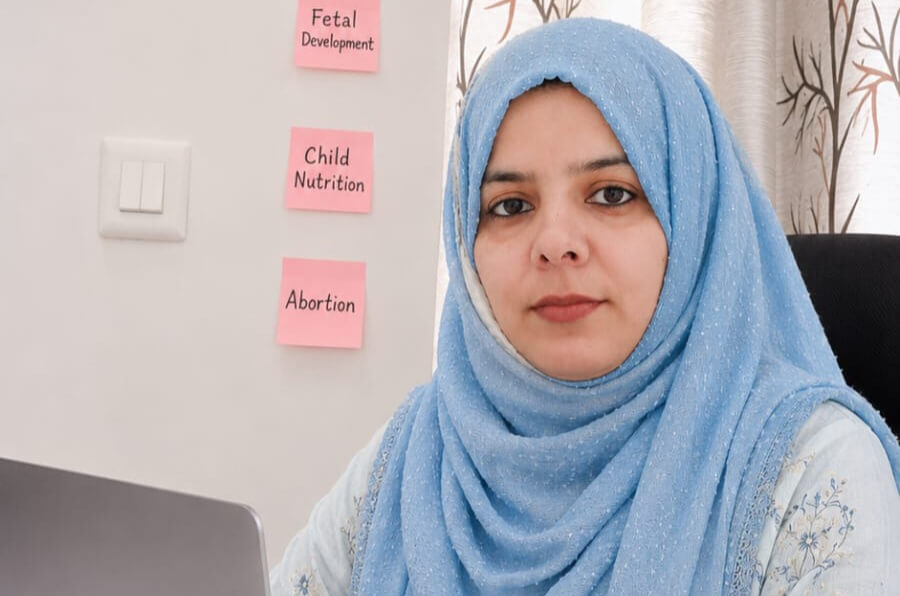
Today, I educate millions of people through my social media platform, Doctor Ammi.
One of my educational reels has crossed 54 million views, and another reached 14 million views in just 24 hours.
People often ask whether I regret leaving my MD.
My answer is simple.
No.
Because I did not leave medicine.
I expanded it.
Instead of treating only the patients who walk into one hospital, I now educate families across the world.
Instead of changing one district, I hope to change how an entire generation thinks about pregnancy, nutrition, and childhood health.
Today, I proudly homeschool my elder child and continue to be fully present for my younger one. I believe raising emotionally secure, healthy children is one of the greatest contributions anyone can make to society.
Looking back, I now understand that every painful chapter of my life had a purpose.
My mother’s illness taught me compassion.
My father’s sacrifices taught me unconditional love.
Medicine taught me science.
Motherhood taught me wisdom.
Together, they became my mission.
Above all, I am deeply grateful to my husband. His unwavering support allowed me to choose a path that many people did not understand. He believed in my vision when it was still invisible to others.
My dream is no longer just to be remembered as a doctor.
I want to be remembered as a woman who helped parents raise healthier children, empowered mothers with knowledge, and proved that sometimes the greatest impact is not made inside hospital walls—but inside homes, one family at a time.
Editor’s Desk | Kashmir News Zone
This article is a personal narrative written by Dr. Asia Ali and submitted to Kashmir News Zone for publication. It has been published in the author’s own words without any editorial changes. The views, experiences, and opinions expressed in this article are solely those of the author and do not necessarily reflect the editorial position of Kashmir News Zone.