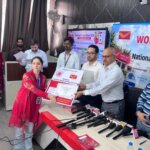
New Delhi: The National Child Development Council (NCDC) held a Core Committee meeting where members talked about food waste management and emphasized the need for better waste collection, sorting, and disposal practices.
During the discussion, members pointed out that poor management of food waste leads to environmental pollution, bad smells, and unsanitary conditions in public areas. They noted that food waste is often thrown along roadsides and in open spaces, even though waste collection programs exist in several locations.
The members stated that municipal bodies, panchayats, or other local authorities should collect food waste daily. They also stressed the importance of sorting and periodic collection of plastic waste, sanitary items, batteries, and other hazardous materials to ensure safe disposal.
It was suggested that every home, apartment, and building should have a system or machine to turn food waste into useful products like cattle feed, which could be sold for profit.
Members referenced waste collection practices in some foreign countries, where localities have shared collection bins that municipal vehicles empty every day. They believed that regular collection can stop waste from going bad and enable recycling of food waste.
The committee noted that food waste is not just an environmental issue; it is also an economic and social problem. It reflects the waste of water, energy, labor, and other resources used in food production. Some members shared examples of food waste being made into organic fertilizer and sold for farming, while recyclable materials are separately processed.
The discussion also highlighted the need to prevent unnecessary food waste by cooking only the amount needed and using leftover food instead of throwing it away. Members recognized that many people still face hunger, making responsible food consumption essential.
Concerns were raised about the difficulties faced by people living in cities and apartments with limited space for food waste management. Members mentioned the high costs of private food waste collection services and called for more attention from authorities to improve food waste disposal methods.
The committee emphasized that both citizens and local authorities must work together to ensure regular waste collection and disposal. Members explained that timely collection can help avoid bad odors, infections, and mosquito breeding.
The meeting wrapped up with a call for households to sort waste properly, cooperate with local authorities, and educate families, especially children, about responsible waste management practices.