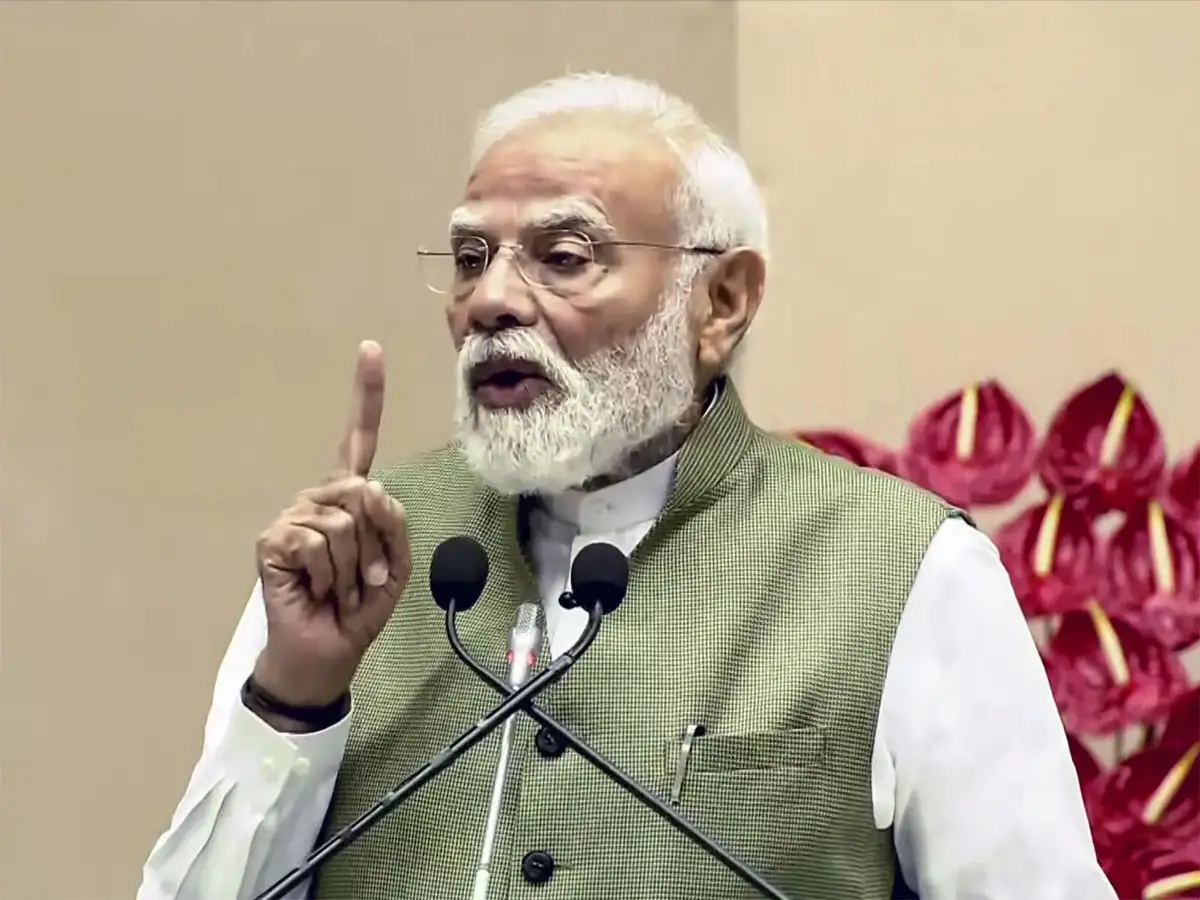
NEW DELHI, AUGUST 25 (KNC): Prime Minister Narendra Modi on Tuesday marked the completion of 10 years of the Unified Payments Interface (UPI), describing the home-grown digital payment platform as a “major turning point” in India’s digital payments journey.
In a post on X, the Prime Minister said the unprecedented scale and reach of UPI were a matter of pride for every Indian and urged citizens to share their experiences of how the platform had transformed their daily lives.
“A decade ago, UPI was rolled out, marking a major turning point in India’s digital payments journey,” Modi said.
UPI Launched in 2016
The Unified Payments Interface (UPI) was developed by the National Payments Corporation of India (NPCI) under the regulatory framework of the Reserve Bank of India (RBI).
A pilot project involving 21 member banks was conducted in April 2016, while UPI was subsequently made available to the public on August 25, 2016.
The platform enabled users to make instant, interoperable bank-to-bank and merchant payments through mobile applications, bringing multiple payment and banking services onto a common digital platform.
Nearly 13,000-Fold Growth in Transactions
Official data reflects the extraordinary expansion of UPI over the past decade.
Annual UPI transaction volume has risen from just 1.78 crore transactions in 2016-17 to more than 24,162 crore transactions in 2025-26, representing an increase of nearly 13,000 times.
The value of transactions has also witnessed massive growth, rising from around ₹0.07 lakh crore in 2016-17 to approximately ₹314 lakh crore in 2025-26—a more than 4,000-fold increase.
The figures highlight how UPI has become deeply embedded in everyday economic activity, facilitating payments ranging from small purchases at local shops to high-value digital transactions.
UPI Records Strong Growth in July 2026
UPI continued its strong growth trajectory in 2026.
In July 2026, the platform processed approximately 2,365.8 crore transactions, involving a total value of around ₹29.87 lakh crore.
The number of banks participating in the UPI ecosystem has also expanded substantially, reaching 741 banks as of July 2026, according to official data.
Backbone of India’s Digital Payment Ecosystem
Over the past decade, UPI has evolved beyond a basic instant-payment mechanism to become a major component of India’s Digital Public Infrastructure (DPI).
The platform now supports a wide range of services, including person-to-person transfers, merchant payments, recurring payments, IPO applications, tax payments, UPI Lite, UPI 123PAY, credit-line integration and UPI Circle.
UPI has also played a significant role in expanding digital payments among small businesses, street vendors, consumers and merchants, strengthening financial inclusion and reducing dependence on traditional payment systems.
UPI Expands Global Footprint
India’s indigenous digital payment system has increasingly gained international recognition.
UPI is now operational or accepted in 11 countries, with countries such as Bhutan, Nepal, Singapore, the UAE, France, Sri Lanka, Mauritius, Qatar, Greece and the Maldives forming part of its expanding international footprint.
The overseas expansion of UPI is seen as an important step in India’s efforts to promote cross-border digital payments and take its digital public infrastructure to the global stage.
From 21 Banks to a Global Payment Network
The 10-year journey of UPI represents a significant transformation in India’s payments landscape.
What began in 2016 with just 21 participating banks has grown into one of the world’s largest real-time digital payment networks, processing billions of transactions every month through hundreds of banks and across an increasing number of countries.
The rapid growth of UPI has been widely viewed as an example of India’s ability to build scalable, inclusive and innovative digital infrastructure.
As UPI enters its second decade, its continued expansion, international adoption and integration with new financial services are expected to further influence India’s digital economy, financial inclusion and payment ecosystem.(KNC)