Touseef Wani
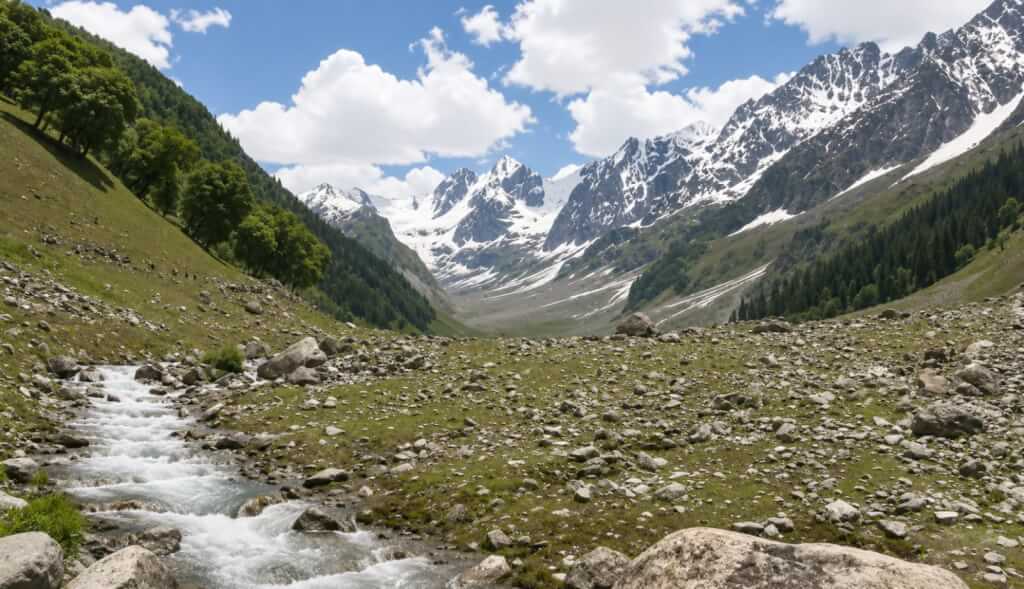
Ganderbal, June 13 (KNC): In a worrying indication of the escalating impact of climate change in the Himalayan region, a recent study has revealed that the famed Thajiwas Glacier in Sonamarg has receded by nearly 95 percent, raising serious concerns among environmental experts and researchers.
Once celebrated as one of Kashmir’s most picturesque natural landmarks and a major draw for tourists, the Thajiwas Glacier has witnessed an alarming decline over the years. Experts attribute the rapid retreat to rising temperatures, reduced snowfall, and shifting weather patterns linked to global climate change.
Researchers noted that the drastic loss of glacial ice highlights the increasing vulnerability of Himalayan glaciers and serves as a stark warning about the long-term consequences of global warming on fragile mountain ecosystems.
Environmentalists cautioned that the continued shrinking of the glacier could have far-reaching implications for the region, including adverse effects on water availability, biodiversity, and the tourism sector that supports the local economy.
The findings have renewed calls for immediate climate action, stricter environmental safeguards, and enhanced public awareness to protect Kashmir’s delicate ecological balance.
Describing the study as a wake-up call, experts urged policymakers, conservationists, and citizens to work collectively to address climate challenges and preserve the Valley’s natural heritage for future generations before irreversible damage occurs.(KNC)