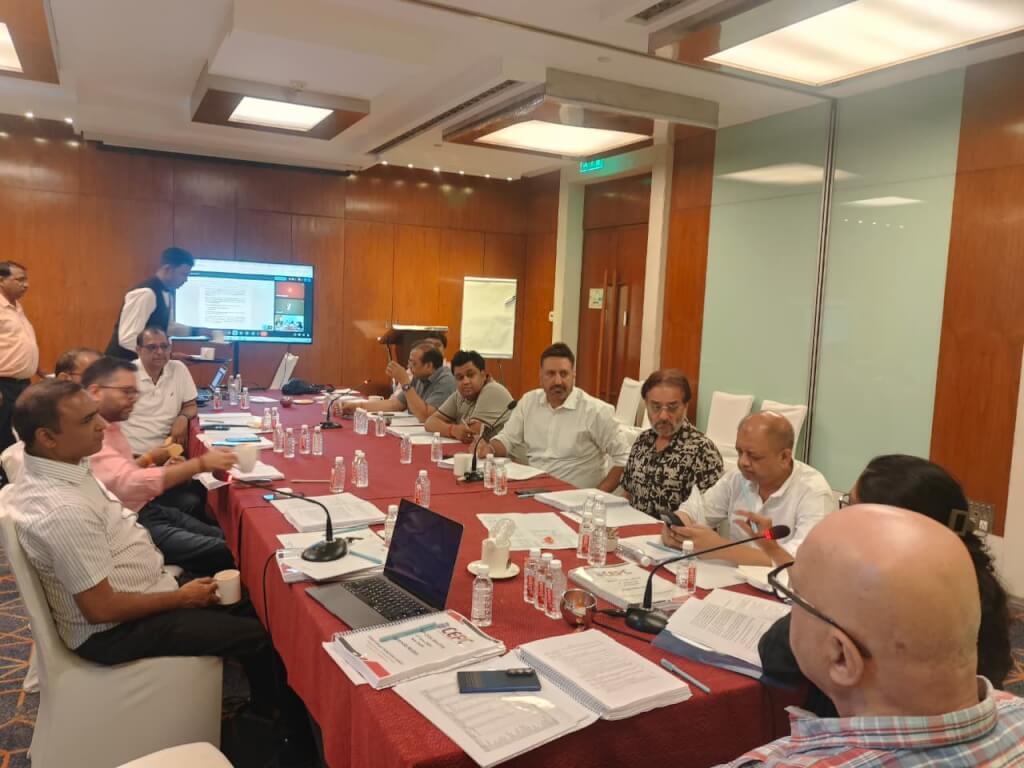
New Delhi: A detailed discussion was held during the Carpet Export Promotion Council (CEPC) Committee of Administration meeting in New Delhi regarding the growing concern of machine-made carpets being sold and marketed as handmade carpets in handicraft showrooms and retail outlets.
The issue was strongly highlighted by Sheikh Ashiq, COA Member, CEPC, who stressed that genuine handmade carpets have their own identity, value, and classification, including a separate HSN code, and cannot be replaced or misrepresented by machine-made carpets. He emphasized that handmade and machine-made carpets are entirely different products in terms of craftsmanship, production process, value, and socio-economic impact.
The meeting was held under the leadership of Mr. Mukesh Kumar Gombar, Chairman, CEPC, and focused on the urgent need for strong measures to safeguard India’s handmade carpet industry and protect the interests of artisans, weavers, exporters, and genuine stakeholders associated with the sector.
During the discussion, it was observed that many buyers come to Kashmir and other handicraft markets specifically to purchase genuine handmade carpets, but are often misguided and sold machine-made carpets in the name of handmade products. This unfair practice has badly affected genuine handmade carpet sales, resulting in large stocks remaining unsold in Kashmir and causing serious hardship to thousands of artisans and weaver families.
Sheikh Ashiq strictly stressed that both the Central Government and the Jammu & Kashmir Government must take strong action against such misrepresentation, not only in J&K-based showrooms but also in handicraft showrooms and retail outlets across the country. He stated that the issue is not limited to business loss alone, but directly affects the livelihood, dignity, and future of artisans who have preserved this craft for generations.
It was further emphasized that the Government should focus strongly on awareness regarding GI labels, certification, and proper identification of genuine handmade carpets. Wider awareness among buyers, retailers, tourists, and stakeholders about GI tagging and certification is one of the most important ways to come out of this problem. Proper promotion of GI-certified handmade carpets will help consumers identify genuine products and prevent machine-made carpets from being sold in the name of handmade.
Protecting genuine handmade carpets is also essential for safeguarding Kashmir’s heritage and cultural identity. The handmade carpet industry has given Kashmir a unique name and recognition across the world, and any attempt to sell machine-made products as handmade damages the credibility of this traditional sector.
Mr. Mukesh Kumar Gombar, Chairman, CEPC, emphasized that CEPC remains committed to protecting and promoting India’s handmade carpet industry. He stated that transparency, strict monitoring, GI awareness, certification, and coordinated action by government departments, industry stakeholders, exporters, retailers, and artisan groups are essential to prevent unfair trade practices and strengthen consumer confidence in genuine handmade carpets.
The meeting concluded with a commitment to develop a comprehensive roadmap for safeguarding the handmade carpet industry through strict action, proper identification, GI labeling, certification, monitoring, and stronger preventive measures against the sale of machine-made carpets in the name of handmade products.